What I do know is that, whatever your view of the Reformation, it's obvious to see that some of the things that drove Luther to anger (and to despair) are everywhere present, to this day, often even in the most "Reformation-centric" evangelical churches....Click here to read the whole thing.
The combination of the damning power of cheap grace with the accusing agony of performance-based righteousness before God exists in every wing of the church. That's because it's not a medieval problem, but a primeval one.
Showing posts with label Reformation. Show all posts
Showing posts with label Reformation. Show all posts
Monday, November 2, 2009
A Primeval Problem, Not a Medieval One
Russell Moore has a sobering post about Reformation Day on Touchstone's Mere Comments blog. Here is an excerpt:

Saturday, October 31, 2009
Friday, October 30, 2009
A Reformation Hymn
All posts this week will have to do with Martin Luther and the Protestant Reformation.
A Mighty Fortress Is Our God
Martin Luther, 1483-1546
A Mighty Fortress Is Our God
Martin Luther, 1483-1546
A mighty fortress is our God, a bulwark never failing;
Our helper he amid the flood of mortal ills prevailing.
For still our ancient foe doth seek to work us woe;
His craft and power are great, and armed with cruel hate,
On earth is not his equal.

Did we in our own strength confide, our striving would be losing,
Were not the right man on our side, the man of God's own choosing.
Dost ask who that may be?  Christ Jesus, it is he;
Lord Sabaoth, his name, from age to age the same,
And he must win the battle.

And though this world, with devils filled, should threaten to undo us,
We will not fear, for God hath willed his truth to triumph through us.
The Prince of Darkness grim, we tremble not for him;
His rage we can endure, for lo, his doom is sure;
One little word shall fell him.

That word above all earthly powers, no thanks to them, abideth;
The Spirit and the gifts are ours, through him who with us sideth.
Let goods and kindred go, this mortal life also;
The body they may kill; God's truth abideth still;
His kingdom is forever.
Thursday, October 29, 2009
Max McLean Narrating Luther's "Here I Stand" Speech
All posts this week will have to do with Martin Luther and the Protestant Reformation.
The Listener's Bible is offering a free download of Max McLean narrating Luther's "Here I Stand" speech delivered at the Diet of Worms (until November 1).
Click here for details.
The Listener's Bible is offering a free download of Max McLean narrating Luther's "Here I Stand" speech delivered at the Diet of Worms (until November 1).
Click here for details.
Luther at the Diet of Worms
All posts this week will have to do with Martin Luther and the Protestant Reformation.
Wednesday, October 28, 2009
Doing Ministry Under Difficult Circumstances
All posts this week will have to do with Martin Luther and the Protestant Reformation.
After Luther's refusal to recant at the Diet of Worms in 1521 (and after already being condemned as a heretic by the Roman Catholic Church), Emperor Charles V placed him under a ban, known as the Edict of Worms. In that edict, the emperor decreed the following:
Though Luther was whisked away and placed in hiding after the Diet of Worms (translating the New Testament into German during that time), he eventually returned to Wittenberg in 1522 to continue teaching, preaching, and pastoring - living every day under that ban. Few, if any of us, have to labor under such difficult circumstances. Still, let us be challenged by Luther's perseverance, and let us strive to be faithful amidst our own hardships.
After Luther's refusal to recant at the Diet of Worms in 1521 (and after already being condemned as a heretic by the Roman Catholic Church), Emperor Charles V placed him under a ban, known as the Edict of Worms. In that edict, the emperor decreed the following:
We enjoin you all not to take the aforementioned Martin Luther into your houses, not to receive him at court, to give him neither food nor drink, not to hide him, to afford him no help, following, support, encouragement, either clandestinely or publicly, through words or works. Where you can get him, seize him and overpower him, you should capture him and send him to us under tightest security.How would you like to do ministry under those circumstances?
Though Luther was whisked away and placed in hiding after the Diet of Worms (translating the New Testament into German during that time), he eventually returned to Wittenberg in 1522 to continue teaching, preaching, and pastoring - living every day under that ban. Few, if any of us, have to labor under such difficult circumstances. Still, let us be challenged by Luther's perseverance, and let us strive to be faithful amidst our own hardships.
Tuesday, October 27, 2009
Luther and the Languages
All the posts this week will have to do with Martin Luther and the Protestant Reformation.
"Luther...was unquestionably one of the theologians who could appreciate what humanist scholarship had achieved: without knowledge of ancient languages there could be no reliable exegesis of the Scriptures! When Erasmus published his edition of the Greek New Testament in December 1516, Wittenberg hailed the work as revolutionary. The first copy available there was received with great ceremony. In contrast to Erasmus, Luther even numbered among the first - of the humanists of his time, among the few - who used Reuchlin's works to study Hebrew. Thus Luther recognized that the mastery of ancient languages was a necessary tool in accomplishing a clear textual interpretation of the Bible."Heiko Oberman, Luther: Man between God and the Devil
Monday, October 26, 2009
Reticent Reformers
All the posts this week will have to do with Martin Luther and the Protestant Reformation.
While recently reading Heiko Oberman's biography, Luther: Man between God and the Devil, I was struck by how reticent Luther was to fulfill the important role he played in the Reformation. It reminded me of the same reticence that would be seen a few years later by another reformer - John Calvin. Neither of these men sought to be the "heroes" that they became, but both of them understood the roles they were to play as part of God's wise providence. There are lessons of humility and of responsibility/duty for us to learn from these two men!
While recently reading Heiko Oberman's biography, Luther: Man between God and the Devil, I was struck by how reticent Luther was to fulfill the important role he played in the Reformation. It reminded me of the same reticence that would be seen a few years later by another reformer - John Calvin. Neither of these men sought to be the "heroes" that they became, but both of them understood the roles they were to play as part of God's wise providence. There are lessons of humility and of responsibility/duty for us to learn from these two men!
"[S]ervice to the Word - Luther had not sought it; the post of a professor - he had not desired it; the misson of an evangelist - he would have liked to avoid it. As he saw it, he entered the monastery under compulsion, blinded by fear; his doctoral studies had been imposed on him against his will by his Augustinian superiors. Instead of fighting and becoming entangled in feuds, he would have liked to devote himself to study and meditation. Time and again, Luther offered to cease his activities if only the Gospel became public property. But again and again he was overwhelmed, led where he did not wish to go, by a God who, irrespective of obedience or disobedience, steers the course of history." -- Heiko Oberman
Sunday, October 25, 2009
A Deeply Embedded Pelagianism
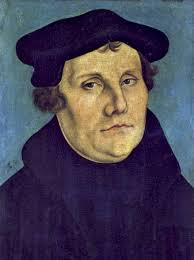 "World and reason have no idea how difficult it is to grasp that Christ is our justification, so deeply embedded in us - like a second nature - is the trust in works."
 --Martin Luther
Wednesday, October 21, 2009
Reformation Heritage Lectures
 Due to health reasons, Dr. James Packer will not be able to deliver the Reformation Heritage Lectures this year at Beeson Divinity School (as previously planned). Instead, Dean Timothy George will be stepping in for this lectureship.
 The lectures will be held each day at 11:00am in the Hodges Chapel and are free and open to the public. Dr. George will be lecturing on the following topics:
Tuesday, Oct. 27: "Suddenly Calvin: What the Reformer of Geneva Can Teach Us Today"
Wednesday, Oct. 28: "William Tyndale and the Making of the English Bible"
Thursday, Oct. 29: "1609-2009: The Baptist Story"
For more information, click here.
Monday, October 19, 2009
Horton on Semper Reformanda
Michael Horton explains the origin (and confusion) of the much used Latin phrase, semper reformanda, in this month's "Pro Ecclesia" section of Tabletalk. Read it here.
Subscribe to:
Posts (Atom)