Monday, April 29, 2013

Salt and Light in the Public Square


For those of you in and around West Tennessee, Union University will be hosting a conference this weekend (Thursday-Saturday) to honor the legacy and vision of Chuck Colson entitled Salt and Light in the Public Square. Keynote speakers include Robert George, Timothy George, Garland Hunt, and Russell Moore.

For more details, click here

Friday, April 26, 2013

Grace All the Work Shall Crown

Grace, 'Tis a Charming Sound
Augustus Toplady, 1740-1778

Grace, ’tis a charming sound,
Harmonious to mine ear;
Heaven with the echo shall resound,
And all the earth shall hear.

Grace first contrived the way
To save rebellious man;
And all the steps that grace display
Which drew the wondrous plan.

Grace first inscribed my name
In God’s eternal book;
’Twas grace that gave me to the Lamb,
Who all my sorrows took.

Grace led my roving feet
To tread the heavenly road;
And new supplies each hour I meet,
While pressing on to God.

Grace taught my soul to pray
And made mine eyes o’erflow;
’Twas grace which kept me to this day,
And will not let me go.

Grace all the work shall crown,
Through everlasting days;
It lays in heaven the topmost stone,
And well deserves the praise.

O let Thy grace inspire
My soul with strength divine
My all my powers to Thee aspire,
And all my days be Thine.

Monday, April 22, 2013

The Importance of Prayer to Preaching

If you are a preacher of God's Word, let this spur you on to pray more urgently as you prepare.  If you are listener of God's Word, let this encourage you to pray regularly for your pastor and other preachers as they prepare.
While it's true that there has been a significant resurgence of biblical preaching, I'm not sure this has been accompanied by a resurgence in praying - and especially not prayer about preaching.

Gradually, we seem to be losing sight of the fact that God uses weak and sinful people, and that he uses them only by grace. Yes, we may sow, plant, and water - but only God gives growth. That's true in your local church and mine. It's also true of every podcast and e-book and conference address under the sun. God doesn't use people because they are gifted. He uses people (even preachers) because he is gracious. Do we actually believe that? If we do believe it, then we will pray - we will pray before we speak, and we will pray for others before they speak. It's that simple.

--Gary Millar and Phil Campbell, Saving Eutychus: How to Preach God's Word and Keep People Awake 

Friday, April 19, 2013

Not What You Give But What You Keep

A Rich Young Man (Simple Living)
Keith and Kristyn Getty, Stuart Townend


A rich young man came to ask of Christ,
"Good teacher, will you tell me:
What must I do for eternal life?
I've kept your laws completely."
"Sell all you have, give to the poor;
Then heaven's treasure shall be yours."
How hard for those who are rich on earth
To gain the wealth of heaven.

Now Jesus sat by the off'ring gate
As people brought their money.
The rich they filled the collection plate;
The widow gave a penny.
"Now she's outgiven all the rest;
Her gift was all that she possessed."
Not what you give but what you keep
Is what the King is counting.

O teach me Lord to walk this road,
The road of simple living.
To be content with what I own,
And generous in giving;
And when I cling to what I have,
Please wrest it quickly from my grasp.
I'd rather lose all the things of earth
To gain the things of heaven.

Tuesday, April 16, 2013

Highly Recommended Book for Preachers

This new book by Gary Millar and Phil Campbell, Saving Eutychus: How to Preach God's Word and Keep People Awake, comes highly recommended.  Just listen to these endorsements:
“I have read books on how to make sure your sermon is interesting, and I have read books on how to make sure your sermon is faithful to the text, but this book wants your sermon to be both. If I could, I would make this little book mandatory reading for seminarians everywhere, and then urge them to read it a couple more times during the course of their ministry. It avoids cutesy and manipulative suggestions, and makes its practical points while urging integrity, faithfulness, and imagination. Many books on preaching are published every year; this one is a "must.”
- D. A. Carson, Research Professor of New Testament, Trinity Evangelical Divinity School
“This book teems with ‘plusses’: it is short (as a tome that takes Eutychus as its poster boy must be); it is stretching (the authors force one to deal with longer texts—and leave one asking, “Why can’t I summarize extended passages like that?”); it is specific (they include actual sermons with critique); it is searching (in case you skip the first chapter, ‘pray’ occurs eight times in the conclusion); and stirring (you still want to preach when you’ve finished reading). If you don’t buy the book, don’t cry if Eutychus isn’t saved!”
- Dale Ralph Davis, Bible expositor and author
“Millar and Campbell write with much wit and wisdom for the sake of our listeners. At some point every preacher must decide whether to preach for the regard of one’s peers or for the welfare of Christ’s people. Millar and Campbell have obviously decided for the latter and give much sound advice for the rest of us to do the same.”
- Bryan Chapell, Chancellor, Covenant Theological Seminary
“Two men who would never be deadly boring or dull are Gary Millar and Phil Campbell, and in this book they use their lively wit to help other preachers keep Eutychus awake. More importantly, they are united in their understanding of and commitment to the task of making God's word known. I pray this book will be of benefit to both preachers and congregations.”
- Phillip D Jensen, Dean of Sydney, St. Andrew's Cathedral, Sydney, NSW
“This book deserves to be included in the ‘must read’ category for preachers. It is readable, which always helps! And, as we would expect, it is biblical and practical. But it is also funny and forthright in a way that made me re-evaluate my preaching and resolve with God’s help to improve. This is a different book from Lloyd-Jones’ Preaching and Preachers and Between Two Worlds by John Stott, but it may prove to be just as influential.”
- Alistair Begg, Senior Pastor, Parkside Church, Cleveland, OH
  

Friday, April 12, 2013

Be Thou My Shield and Hiding Place

Approach, My Soul, The Mercy Seat
John Newton, 1725-1807

Approach, my soul, the mercy seat,
Where Jesus answers prayer;
There humbly fall before his feet,
For none can perish there.

Thy promise is my only plea;
With this I venture nigh;
Thou callest burdened souls to Thee,
And such, O Lord, am I.

Bowed down beneath a load of sin;
By Satan sorely pressed;
By wars without and fears within,
I come to Thee for rest.

Be Thou my shield and hiding place,
That, sheltered near Thy side,
I may my fierce accuser face,
And tell him Thou hast died.

O wondrous love! to bleed and die;
To bear the cross and shame;
That guitly sinners such as I,
Might plead Thy gracious name.

Poor tempest-tossed soul, be still;
My promised grace receive;
I'll work in thee both power and will;
Thou shalt in me believe.

Monday, April 8, 2013

John Wesley's Rules for Singing (1761)

  1. Sing all. See that you join with the congregation as frequently as you can. Let not a slight degree of weakness or weariness hinder you. If it is a cross to you, take it up and you will find a blessing.
  2. Sing lustily, and with a good courage. Beware of singing as if you were half dead, or half asleep; but lift up your voice with strength. Be no more afraid of your voice now, nor more ashamed of it being heard, than when you sing the songs of Satan.
  3. Sing modestly. Do not bawl, as to be heard above, or distinct from, the rest of the congregation, that you may not destroy the harmony; but strive to unite your voices together, so as to make one clear melodious sound.
  4. Sing in time. Whatever time is sung, be sure to keep with it. Do not run before, not stay behind it; but attend closely to the leading voices, and move therewith as exactly as you can. And take care you sing not too slow. This drawling way naturally steals on all who are lazy; and it is high time to drive it out from among us, and sing all our tunes just as quick as we did at first.
  5. Above all, sing spiritually. Have an eye to God in every word you sing. Aim at pleasing Him more than yourself, or any other creature. In order to do this, attend strictly to the sense of what you sing, and see that your heart is not carried away with the sound, but offered to God continually; so shall your singing be such as the Lord will approve of here, and reward when he cometh in the clouds of heaven.

Friday, April 5, 2013

Though in a Foreign Land, We Are Not Far from Home

Your Harps, Ye Trembling Saints
Augustus Toplady, 1740-1778

Your harps, ye trembling saints,
Down from the willows take;
Loud to the praise of love divine
Bid every string awake.

Though in a foreign land
We are not far from home,
And nearer to our house above
We every moment come.

His grace will to the end
Stronger and brighter shine;
Nor present things nor things to come
Shall quench the spark divine.

When we in darkness walk,
Nor feel the heavenly flame,
Then is the time to trust our God,
And rest upon His name.

Soon shall our doubts and fears
Subside at His control;
His loving-kindness shall break through
The midnight of the soul.

Blest is the man, O Lord!
That stays himself on Thee;
Who waits for Thy salvation, Lord!
Shall thy salvation see.

Thursday, April 4, 2013

A Simple Yet Profound Statement about the Bible

In his new book, Taking God Seriously: Vital Things We Need to Know, J. I. Packer makes a simple yet profound statement about the Bible.  He says, "The Bible is both God-given and God-giving...."  God-given and God-giving.  That's not only a nice turn of phrase; it is vitally true and crucial for us to understand.  Because the Bible is God-given, it is authoritative, trustworthy, and accurate.  And because the Bible is God-giving, it is powerful, "living and active," and self-revealing.  This has enormous implications for how we read the Bible, for how we preach and teach the Bible, and for how we hear the Bible preached and taught.

So fellow preachers and teachers, remember this as you stand before God's people this Sunday to proclaim the Word.  Remember that the Bible is God-given and therefore authoritative and true.  But remember also that it is God-giving and therefore powerful and able.  You are not just giving people the Word of God; you are giving them God through his Word!          

Monday, April 1, 2013

A Proper Postlude to Easter

As we have just come off the celebration of Easter and of Jesus' resurrection from the dead (with the words, "Alleluia! Christ is risen!" still ringing in our ears), let us now hear and heed what the Spirit says in Colossians 3:1-4 to us who have been raised with Christ:
If then you have been raised with Christ, seek the things that are above, where Christ is, seated at the right hand of God. Set your minds on things that are above, not on things that are on earth. For you have died, and your life is hidden with Christ in God. When Christ who is your life appears, then you also will appear with him in glory.

Sunday, March 31, 2013

Alleluia! Christ Is Risen!

Christ the Lord Is Risen Today
Charles Wesley, 1707-1788

Christ, the Lord, is risen today, Alleluia!
Sons of men and angels say, Alleluia!
Raise your joys and triumphs high, Alleluia!
Sing, ye heavens, and earth, reply, Alleluia!

Love’s redeeming work is done, Alleluia!
Fought the fight, the battle won, Alleluia!
Lo! the Sun’s eclipse is over, Alleluia!
Lo! He sets in blood no more, Alleluia!

Vain the stone, the watch, the seal, Alleluia!
Christ hath burst the gates of hell, Alleluia!
Death in vain forbids His rise, Alleluia!
Christ hath opened paradise, Alleluia!

Lives again our glorious King, Alleluia!
Where, O death, is now thy sting? Alleluia!
Once He died our souls to save, Alleluia!
Where thy victory, O grave? Alleluia!

Soar we now where Christ hath led, Alleluia!
Following our exalted Head, Alleluia!
Made like Him, like Him we rise, Alleluia!
Ours the cross, the grave, the skies, Alleluia!

Hail, the Lord of earth and Heaven, Alleluia!
Praise to Thee by both be given, Alleluia!
Thee we greet triumphant now, Alleluia!
Hail, the resurrection, thou, Alleluia!

King of glory, Soul of bliss, Alleluia!
Everlasting life is this, Alleluia!
Thee to know, Thy power to prove, Alleluia!
Thus to sing and thus to love, Alleluia!

Hymns of praise then let us sing, Alleluia!
Unto Christ, our heavenly King, Alleluia!
Who endured the cross and grave, Alleluia!
Sinners to redeem and save. Alleluia!

Friday, March 29, 2013

Oh, To See My Name Written in the Wounds


The Power of the Cross
Keith Getty and Stuart Townend

Oh, to see the dawn
Of the darkest day:
Christ on the road to Calvary.
Tried by sinful men,
Torn and beaten, then
Nailed to a cross of wood.

Chorus:
This, the pow'r of the cross:
Christ became sin for us;
Took the blame, bore the wrath-
We stand forgiven at the cross.

Oh, to see the pain
Written on Your face,
Bearing the awesome weight of sin.
Ev'ry bitter thought,
Ev'ry evil deed
Crowning Your bloodstained brow.

Now the daylight flees;
Now the ground beneath
Quakes as its Maker bows His head.
Curtain torn in two,
Dead are raised to life;
"Finished!" the vict'ry cry.

Oh, to see my name
Written in the wounds,
For through Your suffering I am free.
Death is crushed to death;
Life is mine to live,
Won through Your selfless love.

Final Chorus:
This, the pow'r of the cross:
Son of God-slain for us.
What a love! What a cost!
We stand forgiven at the cross.

Wednesday, March 27, 2013

2 New Books Related to Worship

Here are two new books related to worship that I look forward to reading:


Rhythms of Grace: How the Church's Worship Tells the Story of the Gospel, Mike Cosper

Is it singing? A church service? All of life? Helping Christians think more theologically about the nature of true worship, Rhythms of Grace shows how the gospel is all about worship and worship is all about the gospel. Mike Cosper ultimately answers the question: What is worship?


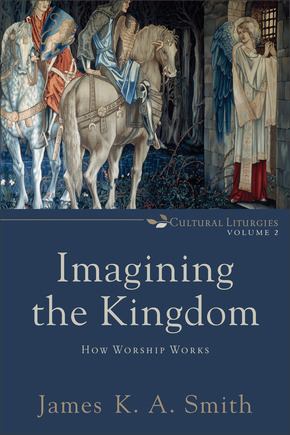
Imagining the Kingdom: How Worship Works, James K. A. Smith

How does worship work? How exactly does liturgical formation shape us? What are the dynamics of such transformation? In the second of James K. A. Smith's three-volume theology of culture, the author expands and deepens the analysis of cultural liturgies and Christian worship he developed in his well-received Desiring the Kingdom. He helps us understand and appreciate the bodily basis of habit formation and how liturgical formation--both "secular" and Christian--affects our fundamental orientation to the world. Worship "works" by leveraging our bodies to transform our imagination, and it does this through stories we understand on a register that is closer to body than mind. This has critical implications for how we think about Christian formation.

Tuesday, March 26, 2013

9 Things to Know about Holy Week

Holy Week (or Passion Week) began this past Sunday with Palm Sunday and will reach its climax with the celebration of Christ's resurrection on Easter Sunday.  The Gospel Coalition blog has an interesting article on 9 Things You Should Know about Holy Week, which was just sent to me by one of our church members. 

Check it out here.   

Monday, March 25, 2013

Poetry Is an X-Ray

A few weeks ago, I began teaching a Wednesday night Bible study at our church on the book of Lamentations.  In the introduction and overview lesson, I tried to make the point that Lamentations captures poetically the grief and sorrow experienced by the people of Jerusalem during and after the fall of their city.  I mentioned that 2 Kings 25 and Jeremiah 52 capture the bare facts (in prose), while Lamentations captures the raw emotions (in poetry).  And I reminded our congregation that poetry has the ability to capture emotions much better than does prose.

Then, a few days ago, one of our church members sent me a link to an interview he heard on NPR with an exiled Iraqi poet who had to flee her homeland because of war.  This interview, and her poetry, illustrates well what I was trying to communicate about Lamentations.  In particular, I appreciated her comment that "poetry is not medicine - it's an X-ray.  It helps you see the wound and understand it."  That's exactly what the poetry of Lamentations does - it provides an X-ray of the grief and sorrow of God's people due to the destruction of Jerusalem.

So, when you read through Lamentations, keep that quote in mind.  Remember that the poetry of that book is meant to provide you with an X-ray of the emotional wounds suffered by God's people.
 
To read the NPR interview with Iraqi-American poet, Dunya Mikhail (and to read some of her poetry), click here.